
Trace a Franklin County Owner
Every solid owner search follows the same chain. It runs from address to parcel, parcel to tax-roll name, then that name to the freshest deed. Begin at the modern Franklin property portal. The search accepts Address, Name, Company, PIN, Parcel, Account, and Subdivision modes. Grab the PIN and legal description right away. Those two connect tax and deed records more reliably than a mailing address ever will.
- Search the physical address and record each plausible parcel.
- Identify the tract in the Franklin ISV map.
- Read the tax-roll name as a dated ownership clue.
- Search the newest transfer through ING Probate Franklin.
- Match the grantee and legal description, then ask the offices about any conflict.
The Franklin County Revenue search screen displays its query modes.
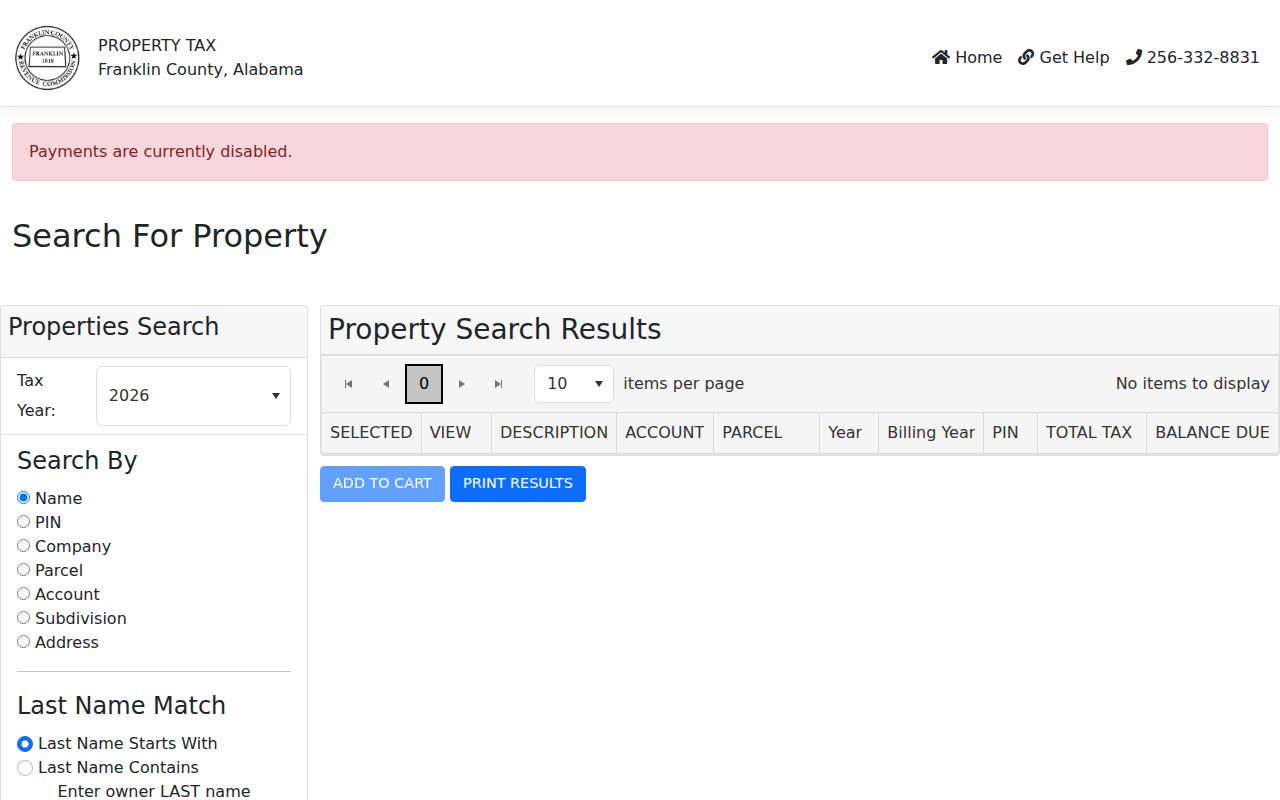
The parcel match on screen is only half an answer. Confirmation comes from the latest deed recorded in Probate.
Two kinds of evidence support the result. The tax roll shows the party listed for taxing, and the deed shows who signed the transfer. Neither a tax card nor a parcel map is a title opinion.
Franklin County Owner Sources
Four public systems hold the pieces. "Owner" may mean the tax-roll name, the deed's grantee, or the party tied to a map layer, and those meanings carry different dates and purposes. Each entry answers its own question.
| Official source | Ownership clue | Access route |
|---|---|---|
| Revenue roll | Assessment name, tax year, mailing clue, parcel key | Modern or legacy search |
| Probate land records | Latest recorded grantee and legal description | Online, office, phone, or copy request |
| Franklin ISV | Mapped tract and enabled detail links | County GIS viewer |
| Secretary of State | Business entity details when a company owns land | Official entity search |
An occupant is not always the owner of record. Estates, trusts, companies, and relatives often appear in the public owner records instead of the person in the house.
Read Franklin Address Clues
Franklin records carry two addresses with different meanings. The situs address marks the parcel's physical location, while the mailing address is where tax correspondence goes, perhaps a post-office box or an address outside Franklin County, and it is a search clue rather than proof of residence, possession, or ownership.
When the modern tool misses, the legacy address search handles the gaps. Its fields split House Number, Pre-Direction, Street Name, and Street Type. The form recommends dropping the suffix. A wildcard such as *woodland shows all matching streets.
Postal place names cross city limits too. Russellville, Red Bay, and Phil Campbell addresses rely on county-held property records, but city permit jurisdiction still calls for a boundary check.
Tax-Roll Owners Can Lag
Alabama Revenue guidance warns that a tax bill can stay in the previous owner's name. This can happen well after a purchase closes. The fix is procedural. The buyer records the deed with Probate and assesses the land with Revenue. Franklin County posts no fixed update window.
Note the tax year and query date. Then compare the newest deed's recording date, grantee, and legal description against the roll. If the deed was just filed, ask Revenue whether the roll awaits an update. That habit separates an apparent owner from the latest transfer.
Key distinction. The tax-roll owner is an assessment clue; the latest recorded deed is stronger evidence of a recent transfer.
Confirm the Franklin Grantee
Deeds, mortgages, liens, easements, releases, and plats all pass through the Probate Judge. The county-linked ING portal publishes no index start year. It also leaves some fields off its landing page. A Franklin search result still shows Book Number, First Page Number, Names, Legal Description, instrument type, record date, grantors, grantees, and book/page.
The grantee receives the stated interest. Match that party to the legal description. Quitclaim deeds show the caution. One Franklin sample transferred whatever interest the grantor had, with no promise of clean title. When copies matter, Franklin advertises $1 per page regular, $6 certified, and certified copies mailed the next business day.
Franklin Ownership Terms
These terms state what a record shows, not whether title is good.
- Owner of record
- The name tied to a public roll or recorded interest at a stated time.
- Vesting
- The way a deed states an interest is held.
- Grantee
- The person or entity receiving the recorded interest.
- Situs address
- The property location, distinct from the tax mailing address.
- Legal description
- The land description used to match the deed to the tract.
Repeated names invite false matches. Legal description and book/page prevent them. A PIN helps too, though Franklin County publishes no segment format and a split or merger may change the number.
Find Franklin Company Owners
Company mode on the modern Franklin portal handles entity-owned land. Search the exact deed grantee there, then compare it against the Alabama business-entity search. A state filing clarifies a legal name and status. But it never makes an officer or registered agent the owner of company land.
Trusts, estates, and life estates need the same care. Search the stated trustee or estate, then follow the recorded instrument. A probate case may explain authority. The deed ties the event to the parcel. Homestead is a tax clue only.
Note: Search the legal entity name exactly as recorded. Then try abbreviations, punctuation changes, or a broad surname wildcard.
Map the Franklin Parcel
A Franklin GIS map settles address-to-tract doubts. Official ISV help describes parcel identification, attribute search, shape selection, measurement, print, and export. No layer list or data date appears on the viewer.
Compare roads, nearby lots, and the parcel's shape. If a detail link appears, copy the PIN. Put the legal clue into Revenue and Probate. The drawn line is never a survey. When boundary proof matters, use a recorded plat, a deed description, and a qualified survey. The Franklin parcel map resource covers the map tools in depth.
Franklin Deed Fraud Cautions
Alabama’s Property Protection Act takes effect October 1, 2026. It targets seller impersonation and false instruments filed against real property. Franklin County offers no alert subscription for deed activity. So watch the record yourself.
A deed you did not expect deserves a direct call to Probate. So does a mailing-address change or an unfamiliar grantee. Keep in mind that recording places a document in the public chain. It does not prove every statement inside it. Legal review still matters, and competing claims are settled elsewhere. Quiet title suits, partition actions, and foreclosures may leave a separate court trail. It runs through the Circuit Clerk.
Limits of Franklin Owner Records
An owner lookup has firm limits. It cannot show who actually occupies a home. It cannot confirm an exact boundary, a valid easement, or marketable title. A transfer not yet posted to the tax roll can slip past it. Protected or sealed court details may never appear. The owner of record answers one question: who held the parcel in a dated source.
Put the tools in the right order. Use the tax roll to spot a likely owner. Use the map to pin down the tract. Use the deed to confirm the last public transfer. A full title examination may still reach deeper. It pulls older deeds, liens, probate events, judgments, releases, and exceptions into view.
Keep the inquiry tied to the parcel itself. Save the PIN, the legal description, the tax year, and the newest deed reference. Skip signatures, account numbers, protected addresses, and personal details that add nothing. A short source log makes later verification easy. It does not turn a land-record search into a file about a person.
Lawful use. Franklin County owner records support purchase research, boundary work, estate matters, and civic review; never use them to harass or harm anyone.