
Franklin County Property Value Types
Alabama tax appraisal starts from fair and reasonable market value. A classification ratio then converts that figure into assessed value. Exemptions and limits can lower the taxable amount further. A sale price records one transfer only. It may appear in deed consideration. It may also appear in related transfer-tax data.
| Value | What It Is | Where |
|---|---|---|
| Appraised value | County estimate of full market value | Revenue roll |
| Assessed value | Appraised value times the class ratio | Revenue roll |
| Taxable value | Value after applicable relief | Assessment/exemption record |
| Last sale price | Historic consideration for a transfer | Deed or sale field |
Use assessed value to explain the tax base. Deed consideration documents a single transfer. A current appraisal, by contrast, offers a dated opinion of value. The Franklin County tax record carries bill, exemption, delinquency, and appeal detail for each parcel.
Alabama Ratios Shape Franklin Values
Assessment ratios come from the Alabama Department of Revenue. Class I utility property is set at 30 percent. Class II sits at 20 percent. Class IV vehicles get 15 percent. Class III gets 10 percent. That class covers qualifying agricultural, forest, owner-occupied residential, manufactured-home, and historic property. Check the county roll for each parcel's classification before reading its assessed value.
A ratio explains assessment math. It does not predict a sale price.
Look Up Franklin County Values
The Revenue portal supports searches by name, PIN, company, parcel, account, subdivision, and address, with a tax-year field for narrowing. Parcel-card labels can vary. Copy only the fields the live result shows.
- Select the relevant tax year and search by the strongest known key.
- Copy the parcel number and exact value labels.
- Note class, exemptions, tax year, and sale fields if shown.
- Check Probate when a recorded transfer amount matters.
- Assessed value
- Appraised value after the class ratio.
- Market value
- The county's full-value appraisal basis.
- Assessment ratio
- The state percentage for the property class.
- Reappraisal
- A review that updates county value facts.
Franklin Exemptions Change Taxable Value
Homestead relief lowers taxable value, not appraised value. Alabama's H-1 through H-4 categories carry different age, disability, income, and tax conditions. The property must satisfy the applicable primary-residence rules. Local proof goes to the Revenue Commissioner. Avoid comparing two owners' taxable figures unless their tax years and exemption status match, and remember that relief never turns assessed value into a market appraisal.
Franklin County Recorded Sale Clues
The Probate deed is the better source for consideration. A reproduced county deed result includes grantor, grantee, deed type, date, book, page, and legal-description fields. Not every amount reflects open-market value. Family transfers, quitclaims, fiduciary deeds, partial interests, and noncash terms can make the stated amount poor evidence of market price. Match deed type and legal description first. A portal's last-sale field, if shown, remains a roll summary rather than the whole instrument.
Franklin County Annual Reappraisal
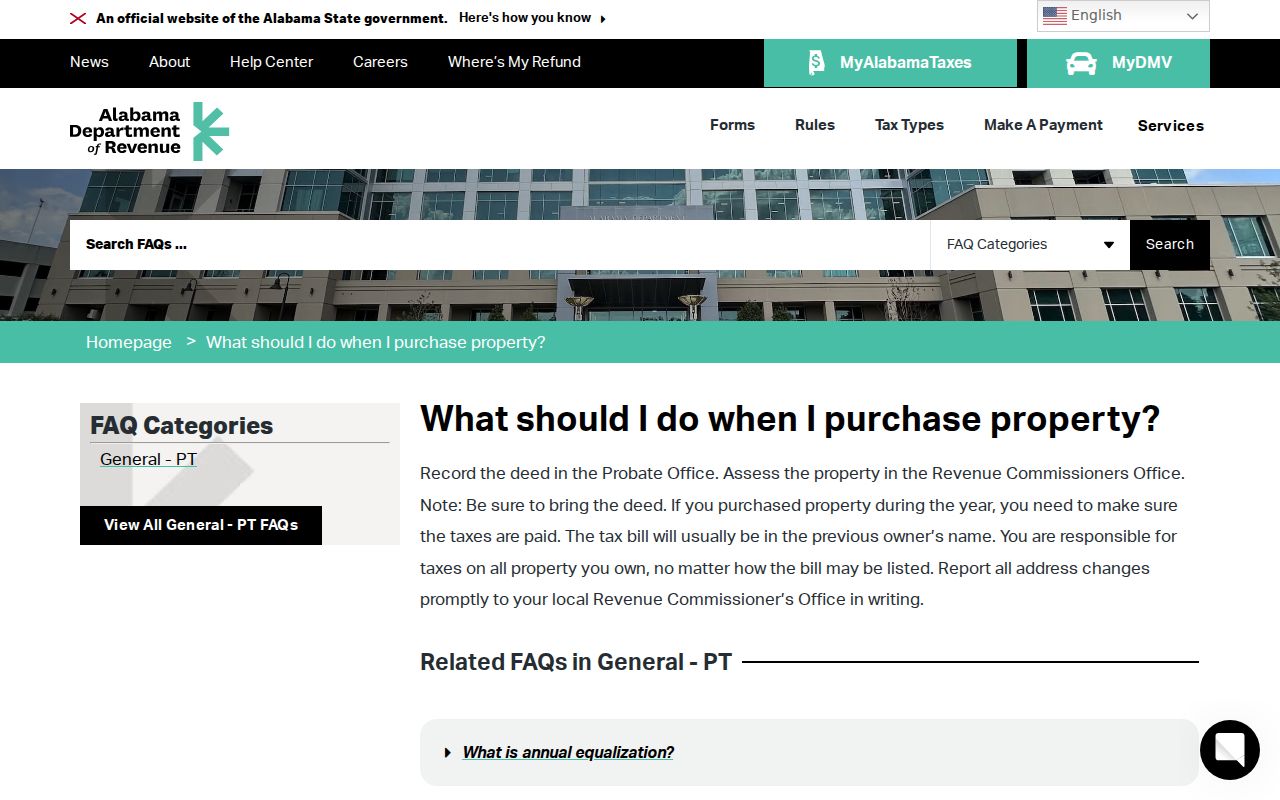
State purchase guidance says one-fourth of each county is reviewed every year, along with new buildings. Franklin's quadrant schedule is not published. A change can mean many things. It may reflect review, construction, corrected facts, or classification, and a buyer must record and assess a purchase even while the tax bill still names a former owner.
The timing shows why the roll is not a closing-day feed.
Local History Affects Value Comparisons
Phil Campbell's 2011 EF-5 tornado caused major loss. An older sale may predate the damage or rebuilding. In Russellville's historic areas, comparison should also happen parcel by parcel rather than through a broad city assumption. Franklin publishes no official city-specific value trend. Compare improvement facts, deed type, parcel identity, and tax year, and never present county ratios as an appreciation rate.
Limits of Franklin County Property Value
Compare like with like. Pull the same tax year and the same property class before you line up any two parcels. Alabama applies different ratios to each class. A Class III assessed figure cannot sit beside a Class II number. Convert both back to appraised value and the applicable percentage first. Exemptions and the 7 percent cap framework can move taxable value while the assessor's fair market estimate stays flat. Record all three fields whenever the portal supplies them, because a later question often turns on the number you nearly skipped.
Then question the sale itself. Read the deed type, the parties, the legal description, the interest conveyed, and the stated consideration. A quitclaim, a family conveyance, an estate distribution, a correction, a trust transfer, or a partial-interest deed may not be an arm's-length sale. It may not convey the full parcel. The Revenue last-sale summary is only a clue. The Probate instrument supplies the context that makes it mean something.
Timing complicates things too. State guidance calls for reviewing one-fourth of each county every year. It also calls for reviewing new construction. Franklin's quadrant schedule was never published. A change on the roll may reflect that review. It may also reflect new improvements, corrected parcel facts, a class change, or a shift in exemption status. It is not proof the market moved by the same percentage. Phil Campbell's tornado and rebuilding history adds its own caution. Pre-damage and post-rebuild records should never be compared as though the improvements were unchanged.
An appeal or a purchase decision deserves real support. Assemble the parcel card, the tax year, photographs or inspection facts, suitable comparable sales, and the newest deed. The Revenue Commissioner explains county assessment entries, while a qualified appraiser supplies a property-specific opinion. The roll is an official tax record. It is not a forecast of the price a buyer will pay. Keep tax-bill questions separate from value meaning. Exemptions, delinquency, payment status, and appeal procedure all belong to the Revenue tax process. This comparison explains what each number represents and why it may differ. Note the source and date beside every figure, so a later roll update cannot erase the basis for your work.
Remember what mass appraisal is. It values many parcels for taxation at once. It may not capture current condition, private work, deferred repair, easements, or unusual sale terms with the detail of a property-specific appraisal. A recorded sale is history. A listing is just an asking price.
Treat the county value as a research fact, never a guarantee. When you need a present opinion, a current inspection, suitable comparable sales, and a qualified appraisal are the stronger tools. Save the classification, appraised value, assessed value, taxable value, exemptions, tax year, parcel identifier, and query date together in one place. Drop one field and unlike parcels start to look alike. If a sale amount seems odd, read the deed type and legal description before using it as a comparison. Estate, family, corrective, partial-interest, and quitclaim transfers may not reflect an open-market sale of the whole parcel.
Value is not price. Franklin County assessed value serves taxation. It is not a promise of sale price or a private appraisal.